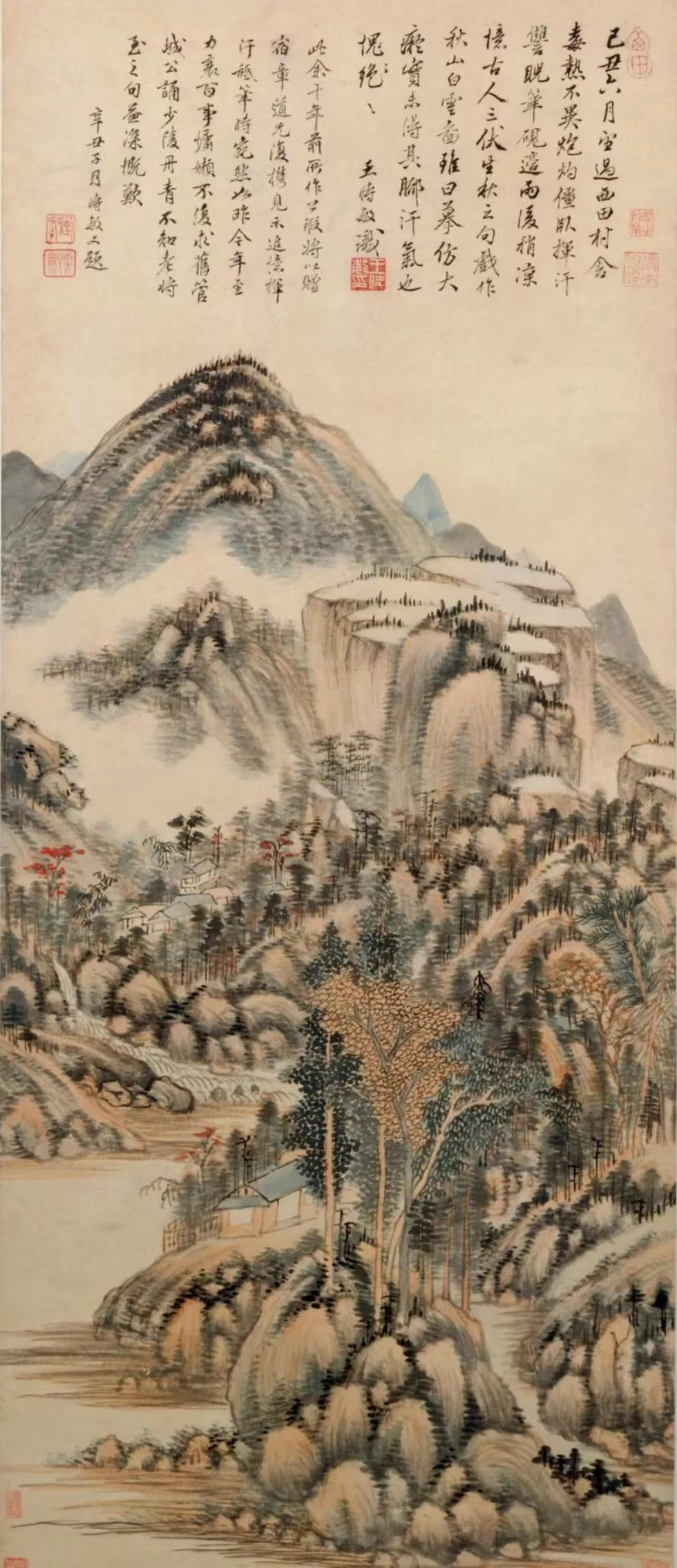
Autumn Mountains and White Clouds
Overview
Autumn Mountains and White Clouds stands out as one of Wang Shimin's most distinguished works, capturing the serene beauty of the Chinese landscape. The painting is renowned for its meticulous attention to detail and the artist's ability to convey depth and texture within the natural scenery. It reflects the prevailing artistic styles of the time, where artists often drew inspiration from the natural world and sought to portray its tranquil essence. Through his work, Wang Shimin not only showcased his technical prowess but also contributed to the cultural heritage of Chinese painting, securing his place among the most esteemed artists of his time.
Artistic Features
Autumn Mountains and White Clouds is distinguished by several artistic features that highlight Wang Shimin's skill and innovation in landscape painting.
Composition
The composition of Autumn Mountains and White Clouds is characterized by its balanced and harmonious arrangement, which draws the viewer's eye through the landscape. The painting captures the undulating forms of mountains enveloped in ethereal white clouds, creating a sense of depth and vastness. This composition reflects the artist's ability to convey movement and stillness simultaneously, a hallmark of his technique.
Techniques
Wang Shimin employed a range of techniques to achieve the delicate textures and intricate details seen in Autumn Mountains and White Clouds. His rigorous brushwork and precision in ink application are evident, resulting in a painting that is both robust and refined. The use of monochrome ink further accentuates the subtleties of the natural forms, highlighting the artist's mastery of traditional Chinese painting methods. His work demonstrates a deep understanding of texture and shading, which brings the landscape to life.
Preservation and Conservation
The preservation of Autumn Mountains and White Clouds is of utmost importance to maintain its historical and artistic integrity. As part of the extensive collection housed by the Palace Museum, the painting is subject to careful conservation efforts to protect it from deterioration. These efforts include maintaining optimal environmental conditions and employing advanced restoration techniques to ensure that this masterpiece endures for future generations. The painting's inclusion in exhibitions and academic studies further underscores its value and the continuous efforts to preserve its legacy within the realm of traditional Chinese fine art.








